Before you buy anything
A footmuff in the car seat: what can go under your child
The same word covers two different objects. One of them belongs nowhere near a harness.
Two things share one word
Shops sell footmuffs, buntings, bunting bags and car seat covers, and the words move around between them. Underneath the vocabulary there are only two shapes, and telling them apart is the whole of this article.
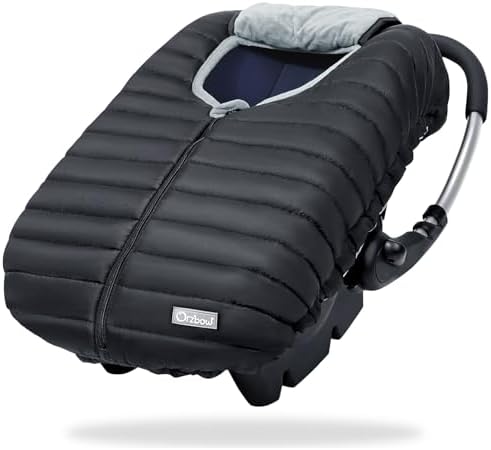
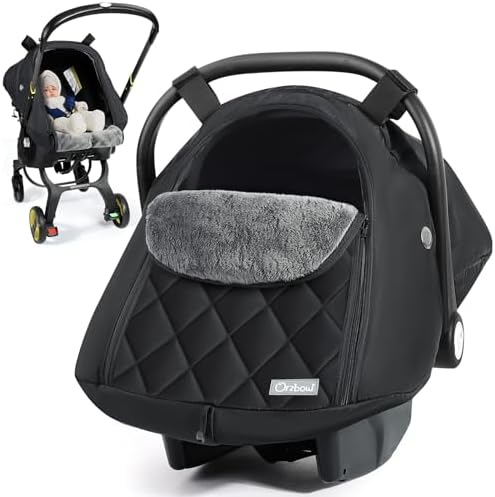
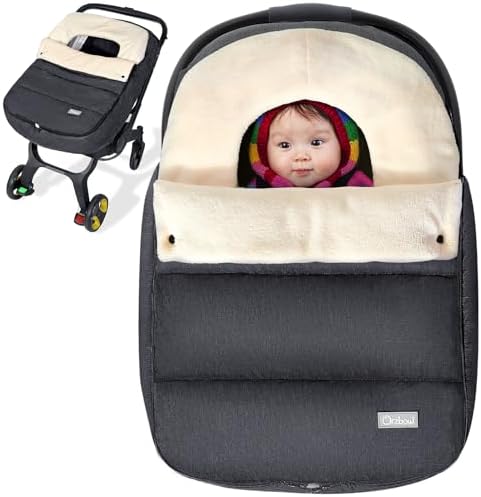
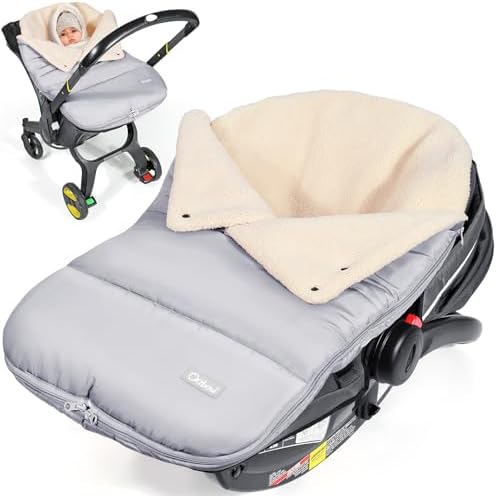
The first shape is a bag. It has a back panel, your child lies on it, and the harness is threaded through slots cut in that panel. The second shape is a hood. It goes over the top of the carrier once your child is already buckled, and the inside of the seat stays exactly as the maker built it. In a stroller both are ordinary. In a vehicle only one of them is.
Why a back panel matters so much
A harness works by holding your child against the shell. Put anything compressible in that gap and you have added slack that only appears when it is needed. Fleece an inch thick feels like nothing in your hand. Under load it flattens to almost nothing, and the strap you carefully tightened now has an inch of give at the shoulder.
That is the reason seat manuals talk about coats. It is the same physics with a different object, and it is why a bag style cover that came with a stroller should stay with the stroller.
The shower cap test
Hold the cover up and look for the back. If you can see straight through to where your child would lie, the cover is a hood and it goes over the outside. If there is cloth there, with harness slots cut into it, it is a bag.
A hood should also open without a fight. You want to lift the front flap, buckle the harness against a thin layer, pinch the webbing to check it, and drop the flap back down, all without lifting your child out again. If you have to undo the cover to reach the buckle, you will stop checking the buckle.
What crash testing does and does not mean here
In the US, child seats are tested to FMVSS 213. That standard applies to the seat. Accessories sold separately are outside it, so there is no result to quote, and a shop that tells you its cover was crash tested with your seat is describing a test that was never run.
Several seat makers go further and write in the manual that a third party cover ends the warranty on the seat. We would rather say that here than have you find it later. Read the manual that came in the box, and when it disagrees with a shop, the manual wins. That includes disagreeing with us.
What we do about it
Everything we cut for the car is a hood. The back stays open, the flap opens from the front, and the harness path is untouched, because there is nothing of ours in it. Our bag shaped pieces are patterned for stroller seats and carriers and are sold that way.
That is a construction statement, not a claim about outcomes. We can tell you where our seams go. What happens in a collision is the seat maker territory and the crash lab territory, and we are not going to pretend otherwise to sell a cover.
Covers cut to go over the outside
Every one of these drapes over the shell and canopy. None of them lays anything behind your child.